
Dehradun is the capital of the Indian state of Uttarakhand, near the Himalayan foothills. At its core is the 6-sided Ghanta Ghar clock tower. To the southwest is Paltan Bazaar, a busy shopping area. Just east is the Sikh temple Gurdwara Nanaksar, topped with ornate white and golden domes. In Clement Town to the city’s southwest, Mindrolling Monastery is a Tibetan Buddhist center with shrine rooms in its Great Stupa.It is the third largest city in the Himalayas after Kathmandu and Srinagar.
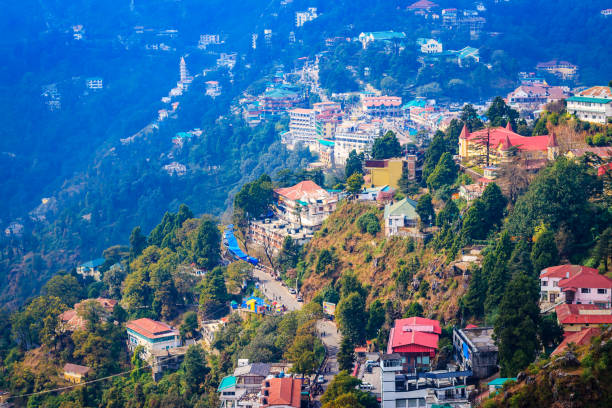
Dehradun is located in the Doon Valley on the foothills of the Himalayas nestled between Song river, a tributary of Ganga on the east and the Asan river, a tributary of Yamuna on the west. The city is noted for its picturesque landscape and slightly milder climate and provides a gateway to the surrounding region.
The history of the city of Uttarakhand, Dehradun (nicknamed "Doon Valley") is linked to the story of Ramayana and Mahabharata. It is believed that after the battle between Ravana and Lord Rama, Lord Rama and his brother Lakshmana visited this site. Also, known as 'Dronanagari' on the name of Dronacharya, legendary Royal guru to the Kauravas and Pandavas in the epic Mahabharata, is believed to have been born and resided in Dehradun. Evidences such as ancient temples and idols have been found in the areas surrounding Dehradun which have been linked to the mythology of Ramayana and Mahabharata. These relics and ruins are believed to be around 2000 years old. Furthermore, the location, the local traditions and the literature reflect this region's links with the events of Mahabharata and Ramayana. Even after the battle of Mahabharata, the Pandavas had an influence on this region as the rulers of Hastinapura with the descendants of Subahu ruled the region as subsidiaries. Likewise, Rishikesh is mentioned in the pages of history when Lord Vishnu answered the prayers of the saints, slaughtered the demons and handed the land to the saints. The adjoining place called Chakrata has its historical impression during the time of Mahabharata.
The city of Dehradun mainly lies in Doon Valley and is at a varying height from 410 m (1,350 ft) in Clement Town to above 700 m (2,300 ft) at Malsi which is 15 km (9.3 mi) from the city. However, the average elevation is 450 m (1,480 ft) above sea level. Malsi is the starting point of Lesser Himalayan Range that extends to Mussoorie and beyond. Jaunsar-Bawar hills in Dehradun district rises to 3,700 m (12,100 ft) above sea level. The hilly region of Mussoorie goes up to a height of 1,870–2,017 m (6,135–6,617 ft) above sea level. Its geomorphological and meteorological characteristics make it prone to a number of natural hazards. Beside earthquakes, the region is frequently devastated by landslides, cloudbursts, flash-floods, cold waves and hailstorms.
Leave a Reply